
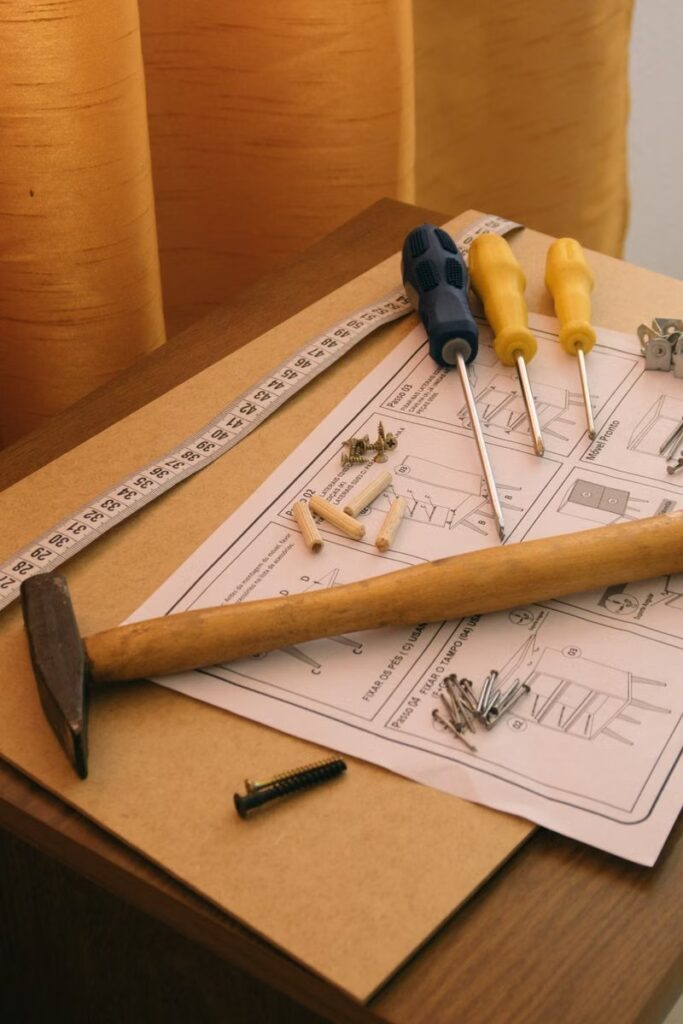
Flat-pack furniture is designed for transport and self-assembly, but the finished result still depends on inventory control, careful fastening, alignment, and safe wall anchoring. A wardrobe with a racked frame may never accept its doors properly; a dresser that is assembled correctly but left unsecured can remain a tip-over hazard.
Professional IKEA furniture assembly is most useful when the order includes several pieces, tall storage, wall-mounted components, complicated drawer systems, or condo access constraints. The service should follow the instructions for the exact product—not a generic assembly routine.
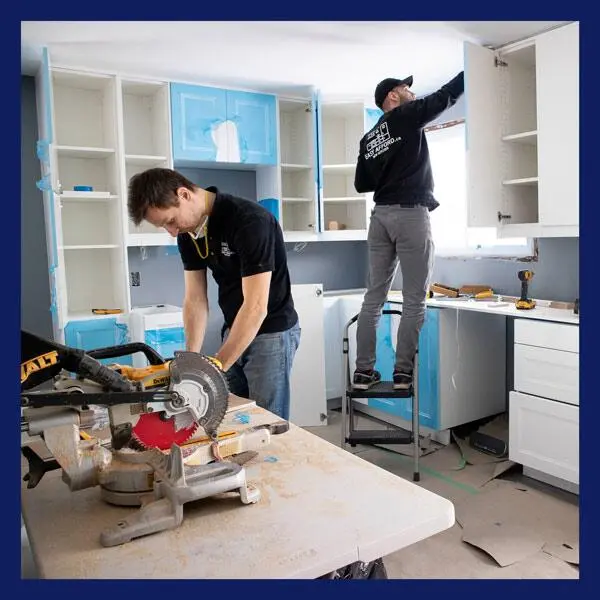
What Furniture Assembly Includes
A clearly defined assembly scope can cover beds, dressers, wardrobes, bookcases, media units, desks, dining furniture, shelving, and modular storage. Before work starts, the assembler should confirm the product names, article numbers, quantities, room locations, and whether mounting is required.
The basic workflow is:
- Verify packages and inspect visible shipping damage.
- Match hardware bags, panels, and fittings to the product instructions.
- Protect floors and create enough space to assemble without twisting panels.
- Build the frame in the specified sequence.
- Square and level the unit before adjusting doors and drawers.
- Secure furniture to the wall wherever the instructions require it.
- Test moving parts and collect packaging for the agreed disposal scope.
Assembly is different from delivery, room planning, wall repair, electrical work, or custom carpentry. Those items should be identified separately instead of assumed.
Prepare Before the Appointment
Keep the packages dry and close to the destination room, but do not block the work area. Compare the shipment with the order confirmation before the appointment. If a carton is missing or clearly damaged, resolving it before assembly avoids a half-built room and a second visit.
Provide the assembler with:
- product links or article numbers;
- the number of each item;
- ceiling height and tight-access information for tall wardrobes;
- wall construction if known—wood stud, concrete, masonry, or another assembly;
- baseboard depth where a cabinet must sit close to the wall;
- condo elevator, loading, parking, and permitted-work hours; and
- any request to remove packaging or move existing furniture.
Some large units must be assembled upright or raised from the floor after assembly. Confirm the manufacturer’s required ceiling clearance before ordering, especially in a basement or condo.
Why Sequence and Fastener Control Matter
IKEA hardware is designed to work as a system. A dowel, cam, rail, screw, or back panel installed in the wrong order can force the next step, damage a finished surface, or make the cabinet rack. Power tools can speed up work, but excessive torque can strip particleboard or pull a fitting through a panel.
A careful assembler separates hardware, checks panel orientation, starts threaded fasteners by hand, and tightens in stages. The back panel or cross-bracing is often what squares the unit. Doors and drawers should be adjusted only after the cabinet is level and stable.
If holes do not align, stop and review the preceding steps. Drilling new holes or forcing a connection can convert a reversible mistake into permanent damage.
Wall Anchoring Is Part of Safe Assembly
IKEA Canada advises securing furniture to the wall to reduce tip-over risk, and the product instructions identify the required attachment devices. The correct wall fastener depends on the wall material. A drywall anchor, wood screw into a stud, and masonry fastener are not interchangeable.
Tall wardrobes, bookcases, dressers, and wall-mounted storage deserve particular attention. Before drilling, check for likely electrical, plumbing, and other concealed services. In a condo, confirm whether the wall is a common element, contains concrete, or is subject to mounting restrictions.
Anchoring should not be omitted because a unit “feels heavy.” Opening drawers or doors shifts the centre of gravity, and children may climb on furniture. If the wall condition cannot support the prescribed attachment, pause the installation and define a safe solution rather than improvising.
Common IKEA Assembly Problems
Missing or damaged parts
Open only what is needed and retain labels until the item is complete. Photograph damage before assembly. A cracked panel, wrong hardware bag, or missing hinge may require replacement rather than an improvised repair.
Uneven floors and walls
An assembled cabinet can be square even when the room is not. Use the product’s levelling provisions, then anchor as instructed. Do not pull a flexible unit against a bowed wall until it becomes distorted.
Reversed panels
Many panels have similar finishes but different hole patterns. Check every orientation before locking cams or nailing a back panel.
Misaligned doors and drawers
Adjustment screws cannot correct a cabinet that is out of square. Level and anchor the carcass first, then set consistent gaps and test the full travel of each moving part.
Unplanned wall mounting
Shelves and cabinets may require mounting space, appropriate fasteners, and permission to drill. Discovering a concrete wall or concealed-service concern after the piece is built can stop the appointment.
When Professional Assembly Saves Time
DIY can be reasonable for a small, familiar item when the homeowner has space, tools, and time to follow every instruction. Professional help becomes more valuable for:
- multi-room orders with many cartons;
- PAX-style wardrobes and other tall storage;
- wall-mounted cabinets or shelving systems;
- products with numerous drawers, hinges, and adjustment points;
- installations around high baseboards or uneven floors;
- rental turnover or move-in deadlines; and
- customers who cannot safely lift or position large panels.
A professional cannot make a missing part appear or correct an inaccurate room measurement without changing the scope. The value comes from preparation, repeatable assembly, damage avoidance, and a safer finished installation.
Furniture Assembly Pricing
There is no dependable numeric price schedule for this scope, so figures have not been invented. Pricing may be set per item, per package, as a defined project, or subject to a minimum visit. It should account for:
- product type and assembly complexity;
- number of items and rooms;
- wall anchoring or mounting;
- difficult access, stairs, or condo booking windows;
- disassembly or removal of existing furniture;
- packaging breakdown and disposal; and
- a return visit caused by missing or damaged parts.
Ask for a written list of included article numbers. A low assembly-only quote may not include moving cartons, mounting, wall fasteners, disposal, or correcting a previously misassembled item.
Kitchen cabinets are a separate scope because their installation affects rails, fillers, countertops, services, and appliances. Homeowners planning that work should use the IKEA kitchen installation guide rather than treating a kitchen as ordinary furniture assembly.
Book IKEA Furniture Assembly Through GMC Construction
GMC Construction can include furniture assembly, mounting, trim touch-ups, and related small repairs through its handyman and maintenance service. Before booking, send the item list, article numbers, photos of the destination rooms, and any condo access rules so the scope can be priced accurately.
If the order is part of a larger renovation, GMC can coordinate assembly after painting, flooring, and other dusty work are complete, reducing the chance of damage or repeated moving.
Conclusion
Reliable IKEA furniture assembly depends on more than tightening fasteners. The packages must be verified, the product sequence followed, the unit squared and adjusted, and required wall anchoring matched to the actual wall. Those steps protect the furniture, the room finishes, and the people using it.
For IKEA furniture assembly in Toronto or the GTA, contact GMC Construction or call 647-450-4466 with the product list for a current quote.