
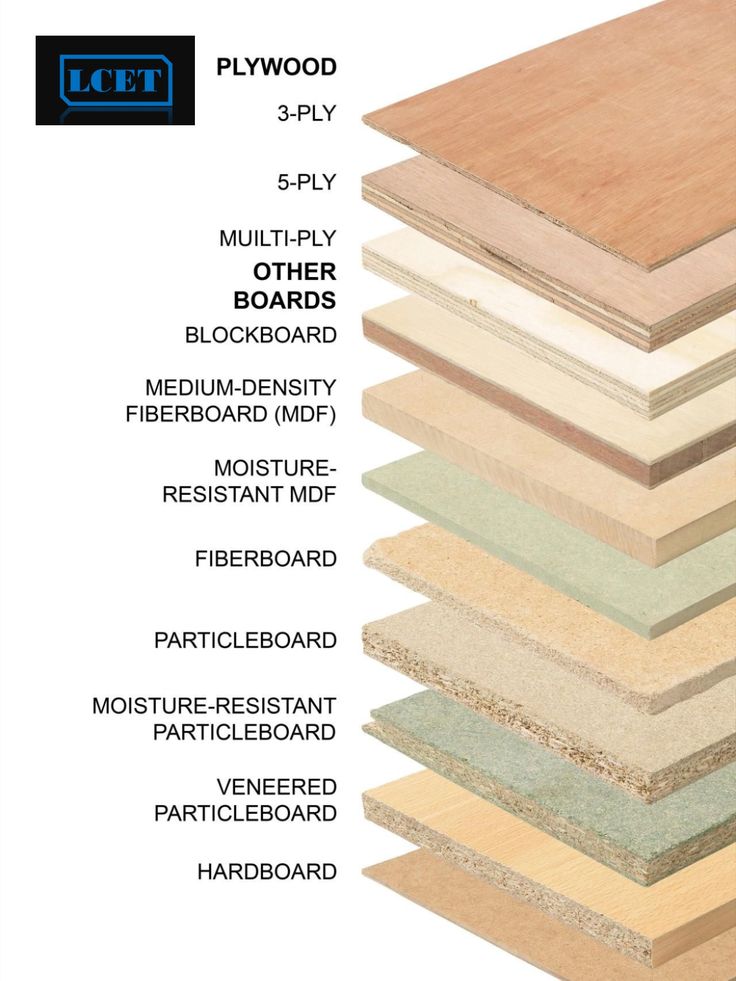
Plywood is one of the most widely used materials in construction, renovation, and cabinetry — versatile, strong, and available in types suited to very different jobs. But “plywood” isn’t one thing: the sheet that’s right for a subfloor is the wrong choice for a kitchen cabinet, and the panel that survives a boat hull would be overkill behind drywall. This guide breaks down the main types of plywood, their grades, and which one to reach for on each project — from a Toronto contractor’s point of view.
What is plywood?
Plywood is an engineered wood panel made by gluing thin veneer layers (plies) together with their grain alternating at 90 degrees. That cross-graining is the whole trick: it makes the sheet far stronger and more dimensionally stable than solid wood of the same thickness, and far less prone to cracking, warping, or shrinking. Sheets typically run 3, 5, or more plies — more plies generally means a stronger, flatter, more stable panel.
The 7 main types of plywood
1. Softwood plywood
Made from pine, fir, spruce, or cedar. The workhorse of construction — framing, subflooring, roof and wall sheathing. Affordable, easy to handle, and strong enough for structural work where it won’t be seen.
2. Hardwood plywood
Made with hardwood veneers like oak, maple, birch, or cherry. This is the go-to for anything visible and finished — fine furniture, cabinetry, trim, and paneling. Superior surface, strength, and appearance; it takes stain and paint cleanly.
3. Marine plywood
Built with waterproof glue and void-free construction for permanent moisture exposure — boat building, docks, and outdoor structures. Not the same as “pressure-treated”; marine ply is about a flawless, fully-waterproof bond with no internal voids where water could sit.
4. Fire-retardant plywood
Chemically treated to slow flame spread. Common in commercial buildings, ceilings, and wall panels where fire code demands it — hospitals, schools, and public spaces.
5. Structural plywood
Load-bearing, thicker, and stamped with a span rating. Used for subfloors, roof decks, and shear walls — anywhere the panel is doing structural work. This is where a contractor pays attention to the APA stamp, not just the look.
6. Decorative / veneer plywood
A hardwood or figured veneer bonded to a stable core, chosen for looks — wall panels, doors, and furniture faces. Gives a high-end wood appearance for less than solid hardwood.
7. OSB (oriented strand board)
Technically not plywood, but the sheet you’ll see next to it: compressed wood strands bonded into a panel. Cost-effective and strong for subflooring and wall sheathing, though it handles moisture poorly if left exposed.
Plywood grades (A, B, C, D) explained
Every sheet carries a grade for its face and back veneer, and it’s the single most useful thing to understand when buying. The letters describe surface quality:
| Grade | Surface quality | Typical use |
|---|---|---|
| A | Smooth, sanded, virtually defect-free | Visible cabinet & furniture faces |
| B | Minor repairs / small tight knots | Paint-grade cabinet work |
| C | Visible knots, patches (“footballs”) | Hidden structural faces |
| D | Largest defects, unsanded | Sheathing / backs, never seen |
A sheet marked “A-C” has a good (A) face and a rough (C) back — perfect when only one side shows. Beyond the letters, an exposure rating (Interior / Exterior) tells you how the glue bond handles moisture.
Which plywood is best for kitchen cabinets?
For quality cabinet boxes, the standard is 3/4″ hardwood plywood — usually maple or birch — with a veneer core (not an MDF core). Veneer core holds screws better for hinges and shelf pins, resists sag on wide spans, and weighs less than MDF. Cabinet backs are often 1/4″ birch ply. For a painted finish, a birch face takes paint beautifully; for stained cabinets, maple or oak shows the grain. This is exactly the kind of material decision we make on every kitchen renovation — the cabinet box you don’t see is what determines how the kitchen holds up for 20 years.
How to choose the right plywood for your project
Choose by use first, then match the grade and exposure:
| Factor | What to consider |
|---|---|
| Project type | Visible (cabinet/furniture) → hardwood, A/B grade. Hidden/structural → softwood or structural ply. |
| Strength & load | Load-bearing work needs structural plywood with an APA span rating. |
| Moisture | Damp or wet areas → exterior-rated or marine plywood; seal exposed edges. |
| Finish | Paint → birch; stain → maple/oak; hidden → grade doesn’t matter, save money. |
| Budget | Don’t over-buy grade for hidden surfaces; don’t under-buy for visible ones. |
Getting it right on a renovation
Picking the right panel is a small decision that quietly determines whether cabinets stay square, floors don’t squeak, and finishes look crisp years later. On a full home renovation, these material calls add up — which is why we specify them deliberately rather than grabbing whatever’s on the rack. If you’re planning a project in Toronto or the GTA and want it built with the right materials from the start, we’re happy to help.
The bottom line
Plywood’s strength, versatility, and value make it one of the most useful materials in any build — but only when you match the type and grade to the job. Softwood for structure, hardwood for what you see, marine for wet, structural for load, and the right grade for the surface. Get that right and everything built on top of it lasts.
Ready to turn this into a real project?
Take what you just read and connect it to our home renovation service — we’ll scope project type, location, timing and budget so you get an accurate quote.
Get a free estimate for your project
Tell us what you're planning and our team will get back to you within 24–48 hours. No obligation.
Frequently asked questions
What are the main types of plywood?
The main types are softwood (construction), hardwood (cabinets and furniture), marine (wet areas), fire-retardant (commercial), structural (load-bearing), and decorative veneer plywood — plus OSB, which is a related engineered panel.
What do plywood grades A, B, C, D mean?
They describe veneer surface quality. A is smooth and nearly defect-free (visible faces), B allows minor repairs, C has visible knots and patches, and D is the roughest (hidden backs and sheathing). A sheet marked A-C has a good face and a rough back.
Which plywood is best for kitchen cabinets?
For quality cabinet boxes, 3/4″ hardwood plywood (maple or birch) with a veneer core is the standard — it holds screws well, resists sag, and finishes cleanly. Backs are often 1/4″ birch plywood.
Is OSB the same as plywood?
No. OSB is made from compressed wood strands rather than veneer layers. It’s cost-effective and strong for subfloors and sheathing, but it handles moisture worse than plywood if left exposed.
What are the main types of plywood?
The main types are softwood (construction), hardwood (cabinets and furniture), marine (wet areas), fire-retardant (commercial), structural (load-bearing), and decorative veneer plywood — plus OSB, which is a related engineered panel.
What do plywood grades A, B, C, D mean?
They describe veneer surface quality. A is smooth and nearly defect-free (visible faces), B allows minor repairs, C has visible knots and patches, and D is the roughest (hidden backs and sheathing). A sheet marked A-C has a good face and a rough back.
Which plywood is best for kitchen cabinets?
For quality cabinet boxes, 3/4″ hardwood plywood (maple or birch) with a veneer core is the standard — it holds screws well, resists sag, and finishes cleanly. Backs are often 1/4″ birch plywood.
Is OSB the same as plywood?
No. OSB is made from compressed wood strands rather than veneer layers. It’s cost-effective and strong for subfloors and sheathing, but it handles moisture worse than plywood if left exposed.