
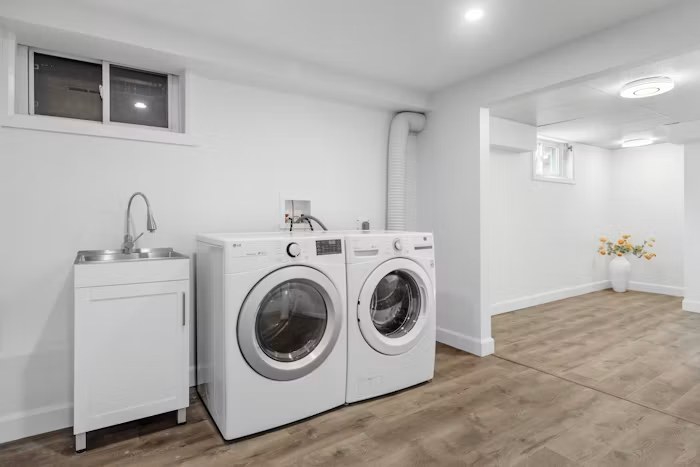
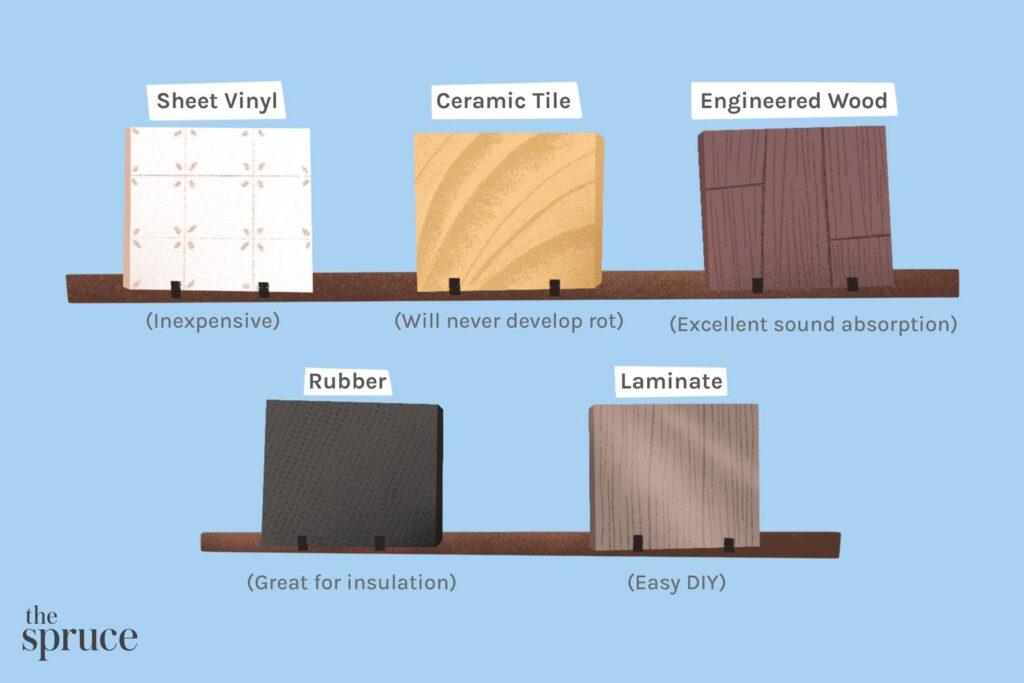
Basement flooring sits directly over one of the coldest and most moisture-sensitive surfaces in a home. The right finish must suit the slab, the water history, the room use, and the installation system—not just the colour sample. Luxury vinyl plank, laminate, tile, engineered hardwood, and carpet can all work below grade under the right conditions. None of them should be installed over an active leak, chronically wet slab, or unresolved drainage problem. Flooring is the finish layer; it is not a waterproofing system.
Start With the Basement, Not the Flooring Sample
Before comparing materials, inspect:
- past flooding, sewer backup, and foundation seepage;
- efflorescence or dark areas on the slab;
- musty odours and high indoor humidity;
- cracks, heaving, settlement, and uneven areas;
- sump, backwater-valve, and drainage condition;
- ceiling height at stairs, doors, and mechanical routes;
- floor drains and cleanouts that must remain accessible; and
- the manufacturer’s below-grade and slab-moisture requirements.
If the basement has a water history, solve and test the water-management system before covering the floor. Review GMC Construction’s foundation waterproofing guide before selecting a finish.
Compare Basement Flooring and Price Per Square Foot
The figures below are material-level planning ranges consolidated into one comparison table. Confirm whether a quote includes underlayment, subfloor, adhesive, transitions, baseboards, stairs, slab preparation, removal, disposal, delivery, and tax.
| Flooring type | Planning price per sq. ft. | Moisture tolerance | Warmth and comfort | Best use |
|---|---|---|---|---|
| Luxury vinyl plank or tile | $2–$7 per sq. ft. | High at the product surface; water can still travel beneath | Moderate; improves with an approved underlayment or subfloor | Family rooms, offices, bars, general living areas |
| Moisture-rated laminate | $1–$5 per sq. ft. | Moderate; seams and edges remain vulnerable | Moderate | Dry, controlled living areas |
| Engineered hardwood | $4–$10 per sq. ft. | Better dimensional stability than solid wood; not waterproof | Warm and firm | Dry premium living spaces where the product permits below-grade use |
| Ceramic or porcelain tile | $3–$15 per sq. ft. | Excellent product tolerance; substrate and joints still matter | Cold unless paired with an approved heating system | Bathrooms, laundry rooms, entrances, wet-prone zones |
| Carpet or carpet tile | $2–$10 per sq. ft. | Low to moderate depending on system; can hold odour and moisture | Highest softness and acoustic comfort | Dry bedrooms, media rooms, family areas |
| Rubber flooring | $3–$7 per sq. ft. | High for the material; trapped moisture remains possible | Cushioned | Gyms, play areas, workshop zones |
| Polished or stained concrete | $2–$6 per sq. ft. | Does not add an organic finish layer; moisture can affect coatings | Cold and hard | Utility, studio, modern rec, and workshop areas |
These ranges are not a complete installed price. Complex slab preparation can cost more than the finish material.
Luxury Vinyl Plank and Vinyl Tile
Vinyl is a common basement choice because the wear surface tolerates spills and the product is available in many wood and stone looks. Rigid-core planks can bridge small imperfections, but they do not eliminate the need for a flat, sound slab.
Advantages
- broad style range;
- easy routine cleaning;
- good resistance to household spills;
- compatible with many floating installations; and
- relatively easy replacement of individual pieces in some systems.
Limitations
“Waterproof plank” does not mean a waterproof room. Water can move through the perimeter, under the floor, and into baseboards or wall assemblies. Trapped water can create odour and require removal even when the plank itself survives. Confirm allowable slab moisture, underlayment, perimeter gaps, rolling loads, sunlight exposure, and installation over radiant heat. Very soft underlayment can damage click joints if it is not approved by the flooring manufacturer.
Laminate Flooring
Laminate has a photographic wear layer over a wood-fibre core. It can provide a convincing wood look at a lower material cost, and many current products offer improved edge treatments and water resistance.
Advantages
- strong scratch resistance in many product lines;
- wide selection of colours and plank formats;
- comfortable residential appearance; and
- efficient click installation on a prepared floor.
Limitations
The core can swell if water reaches joints, edges, or damaged surfaces. “Water-resistant” has a defined manufacturer test and time limit; it does not make laminate suitable for recurring seepage or flooding. Use laminate only in a basement with controlled humidity, a dry slab, and a product approved for below-grade installation. Keep it out of bathrooms, laundry leak zones, and rooms with unresolved water risk unless the manufacturer explicitly permits the application.
Ceramic and Porcelain Tile
Tile is durable, easy to clean, and well suited to laundry rooms, bathrooms, entrances, and bar areas. Porcelain generally has low water absorption, but the full assembly still depends on the slab, mortar, grout, movement accommodation, and waterproofing where required.
Advantages
- strong resistance to surface water;
- excellent wear and dent resistance;
- compatibility with many electric floor-heating systems; and
- wide choice of size, texture, and pattern.
Limitations
Tile feels cold and hard without heat or mats. Cracks and movement in the slab can transfer into the finish if the assembly is not designed appropriately. Large tile needs a flat substrate, and floor drains or sloped areas complicate the layout. Use slip resistance appropriate to the room. Glossy tile selected for appearance may be unsuitable near an exterior entrance, laundry, or bathroom.
Engineered Hardwood
Engineered hardwood has a real-wood wear layer over a layered core. Its cross-layered construction generally makes it more dimensionally stable than solid hardwood, which can make certain products suitable for controlled below-grade spaces.
Advantages
- genuine wood surface;
- warmer visual character than tile or vinyl;
- better stability than solid wood; and
- glue-down, floating, or other installation options depending on the product.
Limitations
Engineered hardwood is not waterproof. The allowable installation depends on the core, wear layer, finish, adhesive, slab moisture, and manufacturer instructions. Some products can be refinished; others have too little usable wear layer. Choose it for a dry, conditioned basement where the premium appearance justifies more careful moisture control. Do not assume that every engineered product is approved for direct installation over concrete or below grade. For a full material comparison, see GMC Construction’s hardwood versus engineered hardwood guide.
Carpet and Carpet Tile
Carpet makes a basement quieter and warmer. It can be comfortable in bedrooms, media rooms, and children’s areas when the basement is reliably dry.
Advantages
- soft underfoot;
- acoustic absorption;
- thermal comfort; and
- modular replacement when carpet tile is used.
Limitations
Carpet and cushion can hold moisture, odour, and contaminants after a leak. A “moisture barrier” may protect one layer while trapping water elsewhere. Traditional broadloom can require large-scale removal after flooding; carpet tile may allow smaller sections to be lifted, depending on the adhesive and backing. Select low-emitting products, an installation system approved for the slab, and a format that can be inspected or replaced. Avoid carpet where sump, laundry, exterior entrance, or plumbing risk is high.
Rubber Flooring
Rubber tiles and rolls are useful in home gyms and play areas because they cushion impact and protect the slab. Check product odour, emissions, thickness, seams, rolling equipment, and compatibility with the concrete. Dense rubber can slow drying if moisture is trapped underneath. Heavy exercise equipment may require load-distribution pads even on rubber flooring. Rubber should not be treated as a substitute for proper gym structure, ventilation, or equipment anchoring.
Polished, Stained, or Coated Concrete
Leaving the slab exposed avoids adding an organic floor finish and suits utility, workshop, or modern spaces. Options include grinding and polishing, stain, densifier, or a compatible coating system. Concrete can reveal cracks, patches, and aggregate variation; that character should be accepted before choosing a decorative finish. Coatings require careful surface preparation and moisture evaluation. A coating applied to a damp slab may blister or delaminate. The surface remains hard and cold, so use area rugs or work mats where comfort is important.
Build the Floor Assembly Correctly
The floor finish is only one layer. A basement assembly may include:
- repaired and levelled concrete;
- moisture-control layer required by the flooring system;
- thermal or drainage subfloor panels;
- approved underlayment;
- adhesive, if required;
- finish flooring; and
- transitions, baseboards, and service access.
Each added layer reduces ceiling height and changes the first stair riser, door clearances, appliance openings, and floor-drain relationships. Plan total thickness before ordering.
Test and Prepare the Slab
Follow the flooring and adhesive manufacturer’s required slab tests and limits. A handheld surface meter may help locate suspicious areas but may not replace the specified test method. Preparation can include:
- removing incompatible paint, adhesive, or curing compound;
- grinding high spots;
- filling cracks or low areas with a compatible product;
- checking flatness over the specified distance;
- cleaning dust and contaminants; and
- allowing patching compounds to cure.
Do not use a thick foam pad to hide an uneven slab. Movement at the joints can damage floating floors.
Add Warmth Without Creating Moisture Problems
A thermal-break subfloor can make vinyl, laminate, engineered wood, or carpet feel warmer, but it raises the finish elevation. Electric radiant heat works well under many tile systems and selected other products when every component is compatible. Confirm:
- floor-covering temperature limits;
- thermostat and sensor location;
- electrical load and ESA requirements;
- insulation or uncoupling layers;
- clearances below fixed cabinets or equipment; and
- repair access.
Area rugs add comfort but should not trap moisture or exceed the heating-system manufacturer’s insulation limits.
Match Flooring to Basement Use
Family Room or Home Office
Vinyl, dry-area laminate, engineered hardwood, or carpet can work. Prioritize acoustics, rolling-chair resistance, and comfort.
Bedroom
Carpet provides warmth; vinyl or engineered wood is easier to clean. Confirm egress, heating, and the legal room use separately from flooring.
Bathroom or Laundry
Tile is a strong choice, while specified vinyl can also work. Waterproofing, floor drains, appliance pans, and plumbing protection are separate decisions.
Home Gym
Rubber is practical for impact and equipment, while vinyl can suit a lighter fitness area. Confirm slab loading and anchor requirements for equipment.
Game or Media Room
Carpet improves sound absorption; vinyl provides easier cleaning and equipment movement. A mixed floor with an acoustic rug can balance both.
Workshop or Utility Room
Sealed concrete, compatible coatings, or durable tile are easier to maintain. Preserve access to drains, cleanouts, and equipment.
Avoid Common Basement Flooring Mistakes
- Installing over an active leak or damp slab.
- Calling a floating floor a waterproofing system.
- Ignoring total floor thickness at stairs and doors.
- Choosing carpet beside a sump or laundry leak risk.
- Using solid hardwood below grade without a specifically approved design.
- Adding unapproved underlayment beneath a click floor.
- Covering floor drains, cleanouts, or service access.
- Skipping slab flatness and moisture requirements.
- Installing tile over active cracks without a suitable assembly.
- Comparing material prices without labour and preparation.
Conclusion
There is no single best basement floor. Vinyl offers broad water tolerance and design flexibility; tile is durable in wet-prone rooms; engineered hardwood provides a real-wood finish in dry controlled spaces; laminate suits lower-risk living areas; carpet adds warmth and acoustics; rubber serves gyms and play areas; and finished concrete suits utility or modern rooms. Diagnose moisture first, build the full floor assembly on paper, and compare installed scope—not just price per square foot.