

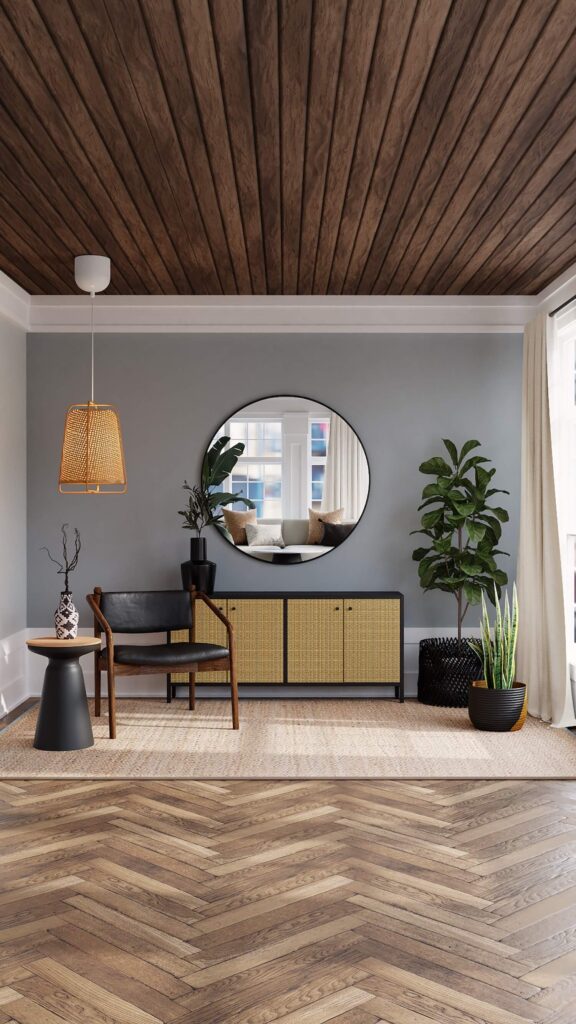
The best renovation material is not the most expensive or the one with the strongest showroom claim. It is the material that suits the room’s moisture, wear, sunlight, cleaning routine, substrate, installation method, and repair expectations. Toronto and GTA homes face wet boots and road salt at entrances, seasonal indoor humidity changes, below-grade moisture risk, strong sun at some windows, and a mix of older and newer construction. Material selection should respond to those conditions and to the household using the space.
Renovation Materials at a Glance
| Category | Strong GTA options | Best use | Main limitation | Relative material cost |
|---|---|---|---|---|
| Main-floor flooring | Engineered hardwood, porcelain tile, quality luxury vinyl | Living areas, kitchens, entries, and open plans selected by exposure | Wood needs humidity control; tile is hard and needs a stable substrate; vinyl quality and subfloor flatness vary | Moderate to high |
| Basement flooring | Porcelain tile, basement-rated vinyl, appropriate floating systems over a dry prepared slab | Below-grade family rooms, offices, gyms, and utility-adjacent spaces | Moisture must be solved first; some products trap or conceal slab problems | Low to high |
| Kitchen counters | Quartz, granite, porcelain or sintered slab, laminate, butcher block | Worktops selected by heat, stain, maintenance, and design needs | Every material has edge, seam, heat, impact, or maintenance limits | Low to high |
| Cabinet boxes and fronts | Plywood, furniture-grade particleboard or melamine, MDF, solid wood, thermofoil | Kitchens, vanities, storage, and built-ins | Water exposure, hardware quality, edge sealing, and finish repairability differ | Low to high |
| Bathroom and shower finishes | Porcelain or suitable ceramic tile over a complete waterproofing assembly | Wet rooms, shower walls and floors, tub surrounds | Tile and grout are not the waterproofing; slip and cleaning needs vary | Moderate to high |
| Interior walls and ceilings | Standard drywall in dry rooms; purpose-rated board and assemblies where conditions require | Living areas, bathrooms outside direct wet zones, basements, fire or acoustic assemblies | “Moisture-resistant” board does not replace shower waterproofing; assembly rating matters | Low to moderate |
| Paint and coatings | Washable low-emission interior paint suited to the substrate and room | Walls, ceilings, trim, cabinets with the correct coating system | Sheen exposes defects; coating cannot solve dampness or poor preparation | Low to moderate |
| Entry and mudroom surfaces | Porcelain tile, durable resilient flooring, water-resistant mats and trim details | Areas exposed to snow, grit, and road salt | Grout, transitions, and adjacent wood still need maintenance | Moderate |
These are broad cost positions, not quotations. Product grade, room size, preparation, installation complexity, freight, fabrication, and labour determine the actual price.
Flooring for Main and Upper Levels
Engineered Hardwood
Engineered hardwood uses a real wood wear layer over a stable layered core. It is often a practical choice where homeowners want genuine wood with better dimensional stability than many solid products. It still responds to moisture and indoor humidity, so acclimation, expansion space, environmental control, and the approved installation method matter. Review the wear-layer thickness and manufacturer refinishing guidance if long-term renewal is important. A product with a very thin wear surface may not support the same future sanding as thicker material.
Solid Hardwood
Solid wood offers a long service life and can often be refinished multiple times. It is best in dry, above-grade rooms with controlled indoor conditions. It is generally not the first choice directly over a below-grade slab or in rooms with repeated water exposure. Species, grade, plank width, finish, subfloor, and fastening method all affect movement and appearance. Very wide boards can show seasonal change more clearly.
Porcelain Tile
Porcelain tile performs well at entrances, kitchens, bathrooms, and other high-wear areas. Its durability depends on a sound substrate, movement accommodation, suitable mortar, correct coverage, and a layout that avoids weak slivers and awkward transitions. Tile feels hard and cool without floor warming, and grout needs cleaning. Select surface texture for the actual wet or dry condition; the most polished showroom finish is not always the safest entry or bathroom floor.
Luxury Vinyl
Luxury vinyl can be resilient, water-resistant, and practical for busy households. “Waterproof plank” describes the plank more than the entire room: water can still reach the subfloor at edges, penetrations, and transitions. Check wear layer, locking system, temperature limits, underlayment, and substrate-flatness requirements. Direct sun and heavy point loads can affect some products. Follow the manufacturer’s rules for large islands, cabinets, and transitions rather than trapping a floating floor beneath fixed millwork.
Flooring for Basements
Below grade, the slab and foundation conditions come first. Do not cover active seepage, high moisture, or unexplained staining with a new floor. Porcelain tile tolerates moisture well but is hard and cold without an appropriate underlayment or heating system. Basement-rated vinyl provides a warmer, more forgiving finish but still needs a flat, prepared substrate and correct perimeter details. Laminate or engineered products should be used only where the specific product and assembly are approved for below-grade conditions. Carpet adds warmth and acoustic softness in dry recreation areas, but it is difficult to recover after water entry. Use a product and pad suited to the location and avoid assuming carpet will mask a cold or damp slab. For the full comparison, use GMC’s canonical guide to basement flooring types and recommendations.
Kitchen Countertop Materials
Quartz
Engineered quartz provides consistent colour, low porosity, and straightforward daily care. It is not immune to heat or impact. Use trivets, follow cleaning guidance, and confirm where seams will fall around sinks, corners, and long runs.
Granite
Granite provides natural variation and good heat resistance. Porosity and sealing needs vary by stone. View actual slabs when pattern and colour matter, and plan support for overhangs and cutouts.
Marble
Marble offers distinctive veining but can etch and stain more readily than many alternatives. It suits homeowners who accept patina and ongoing care. A small showroom sample does not show the full slab’s movement or variation.
Porcelain and Sintered Surfaces
Large-format porcelain and sintered materials can resist heat and staining, but fabrication, edge details, transport, and handling require experienced suppliers. Thin visual profiles still need the correct support and cutout design.
Laminate
Laminate provides strong design value and a broad range of colours at a lower cost position. Protect seams and cutouts from standing water and heat. Edge style and substrate quality influence whether the result looks deliberate or temporary.
Butcher Block
Wood counters add warmth and can be repaired, but they need a clear maintenance plan. Sink areas, seams, and end grain require particular care. Choose the finish system based on the intended use and expected food contact.
Cabinet Materials
Cabinet quality is an assembly of box material, joinery, edge treatment, hardware, finish, design, and installation. Plywood is strong and holds fasteners well, though veneer quality and construction vary. Furniture-grade particleboard or melamine can provide stable, economical cabinet boxes when edges and fasteners are properly detailed. MDF creates a smooth painted door and stable profile but should be protected from standing water and damaged edges. Solid wood is durable and repairable but moves with humidity and is often used selectively for frames and doors. Thermofoil is easy to clean but can be difficult to repair if the surface peels or is damaged by heat. Compare specifications rather than rejecting or accepting a cabinet based on one material name. GMC’s kitchen cabinet materials guide covers these options in detail.
Bathroom and Shower Materials
Porcelain and ceramic tile are durable wet-area finishes when selected for the surface and installed over a complete waterproofing assembly. Shower-floor tile must follow the drain geometry and provide appropriate wet-use traction. Wall tile can be larger, but flat substrate and proper mortar coverage remain essential. Natural stone needs product-specific sealing, setting, and cleaning. Some stones and resin-backed products require special mortars or are not suitable for every wet-area assembly. Waterproof sheet membranes, liquid membranes, and foam backer-board systems can all work when installed as complete compatible assemblies. Cement board is a substrate, not the waterproof layer. Review the bathroom waterproofing systems guide before choosing the shower build-up. Use flexible sealant at appropriate changes of plane and movement joints. Grout should not be expected to bridge normal movement between walls, floors, tubs, and shower bases.
Drywall, Backer Boards, and Wall Panels
Use standard drywall in normal dry rooms when the assembly permits. In bathrooms and basements, choose the board based on actual moisture exposure, fire resistance, sound goal, and code requirement. A moisture-resistant gypsum panel may suit damp walls outside direct spray, but it is not a substitute for an approved shower substrate and membrane. Cement backer board provides a stable tile substrate but still needs waterproofing where the assembly requires it. Foam boards can combine substrate and waterproof core, but joints, fasteners, corners, and penetrations must be sealed. Decorative wall panels in basements should be selected after moisture and fire-performance review. Do not apply combustible or vapour-impermeable finishes over an unknown foundation assembly without checking how the full wall will dry.
Paints and Finishes
Surface preparation controls paint durability. Repair moisture, movement, grease, and poorly bonded coatings before repainting. Primer should suit the substrate and stain condition; the finish coat should suit washability and sheen expectations. Higher sheen usually cleans more easily but reveals wall defects and can create glare. Matte or low-sheen products create a calmer appearance but differ in scrub resistance. Use bathroom-rated coatings on dry bathroom walls and ceilings, while keeping direct wet areas within a waterproof tile or panel system. Low-emission products can improve indoor comfort during and after renovation, but ventilation is still important. Follow cure times before washing or exposing the coating to high humidity.
Materials for GTA Entries and Mudrooms
Snow, grit, and road salt are hard on entrance floors and adjacent trim. Porcelain tile and durable resilient flooring are practical when transitions and substrates are properly detailed. Provide enough mat area to catch water before it reaches wood floors. Use water-tolerant base and trim details at the immediate wet zone, but do not create a sealed pocket that traps water against the wall. Clean salt residue with methods approved for the floor and grout. A material that tolerates water can still be scratched by grit.
Evaluate the Whole Assembly
Before approving a material, ask:
- Is it approved for above-grade, below-grade, wet, exterior, or heated-floor use as applicable?
- What substrate flatness, stiffness, moisture, and temperature conditions does it require?
- Which mortar, adhesive, fastener, underlayment, grout, sealer, or finish is compatible?
- How are edges, seams, penetrations, and transitions handled?
- What cleaning products are prohibited?
- Can a damaged section be repaired or replaced?
- What does the warranty require from the installer and homeowner?
- Is the product still likely to be available if a future repair is needed?
Avoid building a renovation from individually appealing products that do not form a compatible system. Waterproofing, tile, mortar, heating, floor, cabinetry, counters, and coatings all depend on the layers beneath and beside them.
Match Material Grade to the Household
A family entrance, rental unit, quiet adult bathroom, and showpiece kitchen do not need the same finish strategy. Spend where the material improves daily performance: cabinet hardware that sees constant use, waterproofing hidden behind shower tile, a durable entrance floor, or a counter suited to how the household cooks. Use samples in the home. View them in daylight and artificial light, beside existing finishes, and after testing water spots, fingerprints, or approved cleaners. A sample that only looks good under showroom lighting is not enough. GMC Construction coordinates material selection with structure, moisture control, substrate preparation, plumbing, electrical, and installation through its home renovation services across Toronto and the GTA.
Conclusion
The best materials for GTA homes are durable because they fit their environment and assembly—not because they carry a premium label. Choose floors for moisture and wear, counters for the household’s maintenance habits, cabinets for construction and hardware quality, and wet-area finishes as part of a complete waterproof system. Start with the room conditions, verify product compatibility, and price the whole installed assembly. That process produces a renovation that performs through GTA seasons and remains practical to clean, repair, and live with.