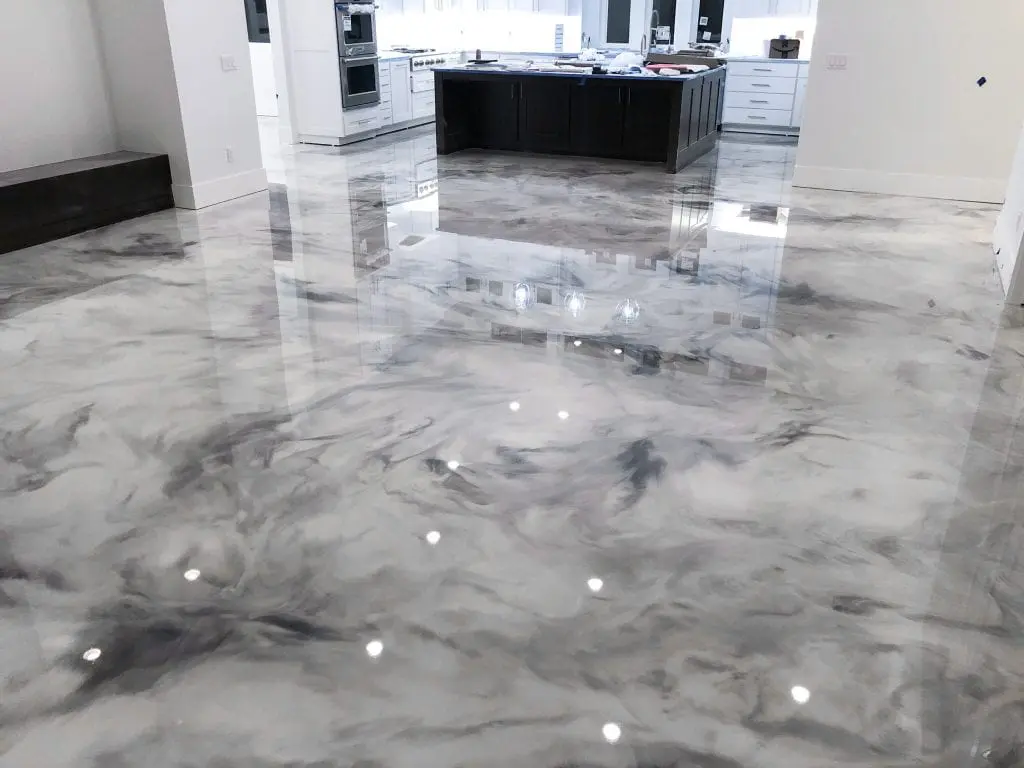
Epoxy flooring creates a hard, seamless finish over a properly prepared concrete surface. It is used in garages, basements, commercial spaces, showrooms, warehouses, and other areas where durability and easy cleaning matter. The finished performance depends on the condition of the slab, surface preparation, the selected coating system, and correct curing.
What Is Epoxy Flooring?
An epoxy floor system combines resin and hardener. Once mixed and applied, the components react and bond to the prepared substrate, creating a rigid coating. Depending on the system, the floor can have a smooth, textured, coloured, flake, quartz, or metallic finish.
Epoxy is most commonly applied over concrete. It can improve appearance and protect the slab, but it does not correct every underlying problem. Active moisture, movement, contamination, and structural cracks must be assessed before coating begins.
Main Benefits of Epoxy Flooring
Durability
A suitable epoxy system can resist abrasion, impacts, stains, and regular traffic. The required build and topcoat should match the way the room will be used; a residential garage and an industrial workspace do not have the same performance needs.
Design flexibility
Epoxy is available in many colours and finishes. Decorative flakes can create a practical, varied surface, while quartz and metallic systems offer more distinctive visual effects. Gloss level and texture can also be selected to suit the space.
Easier maintenance
The seamless surface has fewer joints where dust and debris can collect. Routine cleaning is generally straightforward, although the cleaning products used must be compatible with the coating.
Resistance to spills and chemicals
Some epoxy systems resist oils, cleaning products, and other chemicals. Resistance varies by product, concentration, exposure time, and topcoat, so the coating must be selected for the actual environment.
Long-term value
Epoxy can be a practical flooring choice when the slab is sound and the system is installed correctly. Durability and lower maintenance can reduce the need for frequent surface replacement.
Safety options
Slip-resistant aggregate can be added where extra traction is required. The right texture depends on whether the space is dry, wet, residential, commercial, or industrial. A high-gloss epoxy floor should not automatically be assumed to be slip-resistant.
Types of Epoxy Flooring
Self-levelling epoxy
Self-levelling systems create a smooth, continuous finish over a prepared substrate. They can help cover minor surface imperfections, but cracks, damaged concrete, and moisture issues still require proper repair or treatment before application.
Mortar epoxy
Epoxy mortar combines resin with aggregate to create a heavy-duty system. It is commonly considered for demanding commercial or industrial environments and for repairs that require greater build and strength.
Quartz-filled epoxy
Quartz aggregate adds texture, visual variation, and traction. This system is often selected for commercial kitchens, service areas, washrooms, and other spaces where a decorative but more slip-resistant finish is useful.
Anti-static epoxy
Anti-static or electrostatic-dissipative systems are designed for spaces containing sensitive equipment or processes. These are specialized assemblies that require appropriate design, installation, and testing.
Metallic epoxy
Metallic pigments create movement, depth, and marbled visual effects. Because the appearance is shaped during application, sample review and installer technique are important to the final result.
Where Epoxy Flooring Works Well
| Setting | Why Epoxy May Fit |
|---|---|
| Residential garages | Durable surface, easier cleanup, decorative options |
| Basements and utility rooms | Seamless finish and practical maintenance |
| Retail and showrooms | Custom colours and a polished appearance |
| Offices and commercial interiors | Durable finish for regular foot traffic |
| Warehouses and workshops | Systems available for heavier use |
| Food-service areas | Seamless, cleanable surface when the specified system suits the environment |
| Healthcare and service spaces | Non-porous finishes that support routine cleaning protocols |
Product selection should account for vehicle traffic, hot tires, sunlight, moisture, chemicals, hygiene requirements, and expected maintenance.
The Epoxy Flooring Installation Process
| Step | What Happens |
|---|---|
| Surface assessment | The concrete is checked for cracks, damage, contamination, moisture, and previous coatings. |
| Surface preparation | Dirt, oil, weak concrete, and incompatible coatings are removed; the slab is mechanically prepared as required. |
| Repairs | Cracks, pits, and damaged areas are treated with a compatible repair material. |
| Primer | A suitable primer is applied when required by the selected system. |
| Epoxy application | Resin and hardener are measured, mixed, and applied within the product’s working time. |
| Decorative or traction layer | Flakes, quartz, pigments, or slip-resistant aggregate are added where specified. |
| Topcoat and curing | A compatible finish coat is applied and protected until the system has fully cured. |
Why Surface Preparation Matters
Surface preparation is often the difference between a durable coating and one that peels, bubbles, or wears prematurely. Concrete must be clean, sound, and compatible with the coating. Grinding or another mechanical preparation method may be required to create the correct profile.
Moisture should also be investigated. A coating applied over a slab with an unresolved moisture problem can fail even if the visible surface looked dry during installation.
Epoxy Flooring Maintenance
- Remove grit regularly so it does not abrade the finish.
- Clean spills promptly with a product approved for the coating.
- Avoid harsh tools or chemicals unless the manufacturer confirms compatibility.
- Use protective pads under sharp or concentrated loads.
- Inspect high-traffic areas and address damage before it spreads.
Is Epoxy Right for Your Space?
Epoxy is a strong option when you want a seamless, customizable surface over concrete. It may not be the right solution when the slab has unresolved moisture, active movement, or contamination that cannot be corrected. The best system is chosen by matching the substrate and expected use to the coating specifications.
GMC Construction provides residential and commercial renovation services across Toronto and the GTA. To discuss epoxy flooring as part of your project, call 647-450-4466.
Ready to turn this into a real project?
Take what you just read and connect it to our home renovation service — we’ll scope project type, location, timing and budget so you get an accurate quote.
Get a free estimate for your project
Tell us what you're planning and our team will get back to you within 24–48 hours. No obligation.