
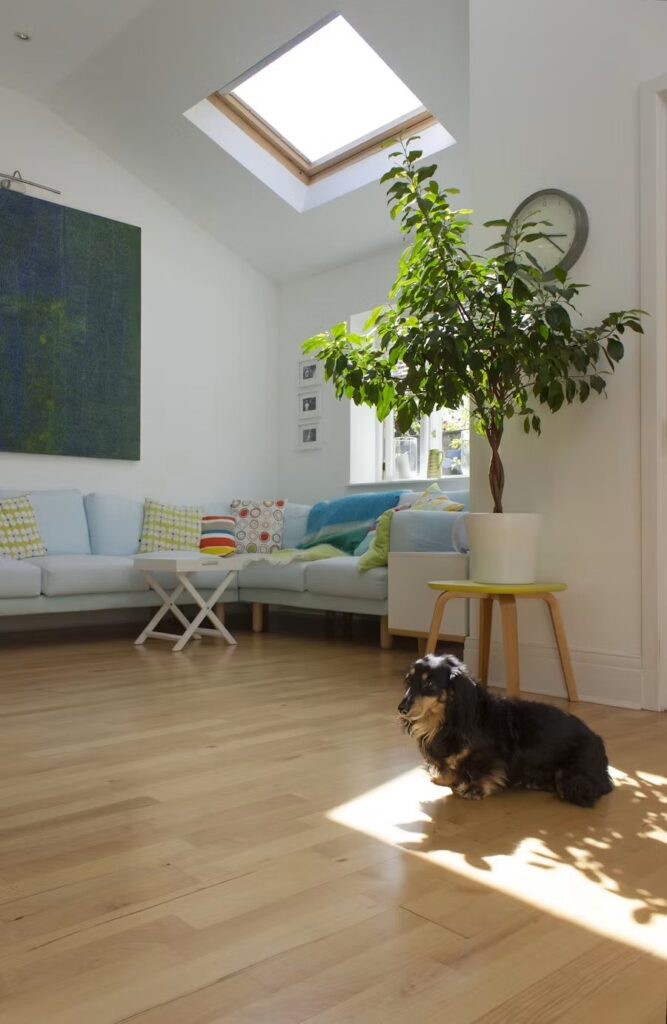

A pet-friendly basement should be comfortable for animals without becoming difficult for people to clean, maintain, or use. Below-grade rooms add specific concerns—cool floors, humidity, limited daylight, stairs, mechanical equipment, and the possibility of moisture—so durable finishes are only one part of the plan. Whether the basement is a family rec room, a pet-care zone, or part of a rental property, design it around the animal’s size, age, mobility, habits, and level of supervision.
Control Moisture, Temperature, and Air Quality
Resolve leaks and dampness before installing finishes. Pet bedding and textiles can hold moisture and odours, while carpet can conceal a problem until damage is widespread. Inspect the slab and foundation, maintain appropriate humidity, and provide dependable heating and ventilation. Avoid relying on an unattended portable heater. Keep beds, crates, and litter areas away from combustion equipment, sump pits, electrical panels, and service clearances. Mechanical rooms should have secure doors or barriers that do not interfere with ventilation or maintenance. Basement windows can provide valuable daylight, but cords, screens, and low sills need to be safe for the animal. A window screen is not fall protection or a secure pet enclosure.
Choose Flooring for Traction and Cleanup
The best surface depends on the pet as well as the basement. A senior dog may need more traction and cushioning than a young cat; a feeding or wash area needs better water tolerance than a quiet sleeping corner.
Luxury vinyl plank
Quality vinyl plank is easy to wipe and can tolerate routine spills when the product and installation are suitable. Select a wear layer and texture that resist scratching without becoming slippery. Water-resistant flooring is not a cure for moisture coming through the slab.
Porcelain or ceramic tile
Tile is durable and easy to sanitize. It can feel cold and hard, and highly polished surfaces may be slippery. Use appropriate texture, washable mats, and comfortable resting surfaces.
Rubber flooring
Residential-rated rubber flooring provides grip and impact comfort in a play or training zone. Verify emissions, seams, adhesive, and subfloor compatibility. Some rubber products can react with certain finishes or retain odour, so review product data rather than buying gym flooring by appearance alone.
Laminate
Water-resistant laminate may work in a controlled, dry basement, but standing water can damage joints and core material. It is less forgiving around water bowls or frequent accidents than a truly water-tolerant finish.
Carpet and rugs
Wall-to-wall carpet traps hair, dander, spills, and odour and is difficult to inspect after moisture. Removable, washable rugs or replaceable carpet tiles are easier to manage, provided the slab remains dry. See GMC Construction’s basement flooring guide for a broader below-grade comparison.
Create Clear Pet Zones
Giving each activity a location makes the room easier to maintain.
Resting zone
Place a bed or crate away from drafts, stairs, loud mechanical equipment, and busy circulation. Use a washable cover and leave enough room for the animal to stand and turn comfortably.
Feeding zone
Set bowls on a washable, water-tolerant surface. A nearby closed cabinet can hold food and medication out of the pet’s reach. If cabinetry includes a water line or sink, plan shutoffs, waterproof finishes, and any required plumbing work.
Play and training zone
Keep this area open, well lit, and free of sharp corners, exposed cords, and breakable décor. Traction matters more than a glossy appearance. Store toys in vented, washable bins.
Litter or relief zone
Provide ventilation and an easy-to-clean floor while keeping the area away from food preparation and return-air grilles. A concealed litter cabinet still needs sufficient opening size, air movement, and regular cleaning.
Wash station
A pet-wash sink or low shower can be convenient, but it turns a decorating idea into a plumbing project. Plan drainage, waterproofing, hot-water protection, slip resistance, ventilation, and access before construction.
Protect Pets From Household Hazards
Use secure gates where stairs or utility rooms need separation. The gate should suit the animal’s size and jumping ability and should not create a tripping hazard in an exit route. Also address:
- loose electrical cords and accessible power bars;
- damaged receptacle covers;
- cleaning chemicals, paint, and pest-control products;
- sharp tools and small chewable objects;
- unstable shelves or televisions;
- open sump pits and floor drains;
- houseplants and finishes that may be toxic to the specific animal;
- gaps behind appliances or cabinets where a small pet can become trapped.
Electrical changes should be handled through the proper process by a qualified electrical contractor. Do not route cords under rugs or use makeshift covers where chewing is likely.
Use Washable Walls and Durable Details
Washable paint in an appropriate sheen makes mud and nose marks easier to remove. Tough baseboards, well-sealed trim joints, and protected outside corners withstand more impact than delicate profiles. Smooth wall protection can help in feeding, washing, or kennel zones, but avoid deep grooves that trap hair. Furniture covers should be removable and washable. Secure tall cabinets and choose window treatments without dangling cords. If scratching is expected, provide a designated surface rather than trying to make every finish indestructible. Cat shelves and wall-mounted equipment need backing and fasteners designed for the load; drywall anchors alone may not be suitable.
Plan Storage Around Daily Routines
Keep frequently used leashes, towels, waste bags, and grooming tools near the stair or exit. Store bulk food in sealed containers in a cool, dry cabinet. Separate medication and cleaning supplies from treats to reduce mistakes. Hooks should not leave long straps hanging within chewing reach. Ventilate cupboards used for damp towels, and make space for a vacuum or cleaning tools so hair and grit are easy to remove.
Design for Aging and Changing Needs
A young pet may need containment and a large play area; an older one may need non-slip runners, a warmer bed, and reduced stair use. Avoid permanent built-ins that make the basement usable for only one stage of the animal’s life. If the pet cannot use stairs safely, the basement should not become its only feeding, sleeping, or relief area. Consider access at the whole-home level rather than trying to solve mobility with a slippery improvised ramp.
Keep the Budget Focused on Durability
Floor preparation, moisture correction, ventilation, built-in storage, plumbing, and custom gates usually affect the scope more than decorative accessories. Current material and installation allowances should be confirmed for the selected products and site conditions. Choose finishes by lifecycle and repairability. A surface that can be cleaned or repaired locally may cost less over time than a cheaper finish that must be replaced after one leak or accident.
Conclusion
A pet-friendly basement combines dry construction, comfortable air and temperature, good traction, simple cleanup, secure zones, and protected utilities. Plan around the actual animal rather than a generic pet theme, and keep the room adaptable as needs change. GMC Construction can coordinate moisture control, flooring, storage, electrical, ventilation, and plumbing so the finished basement works for every member of the household.